
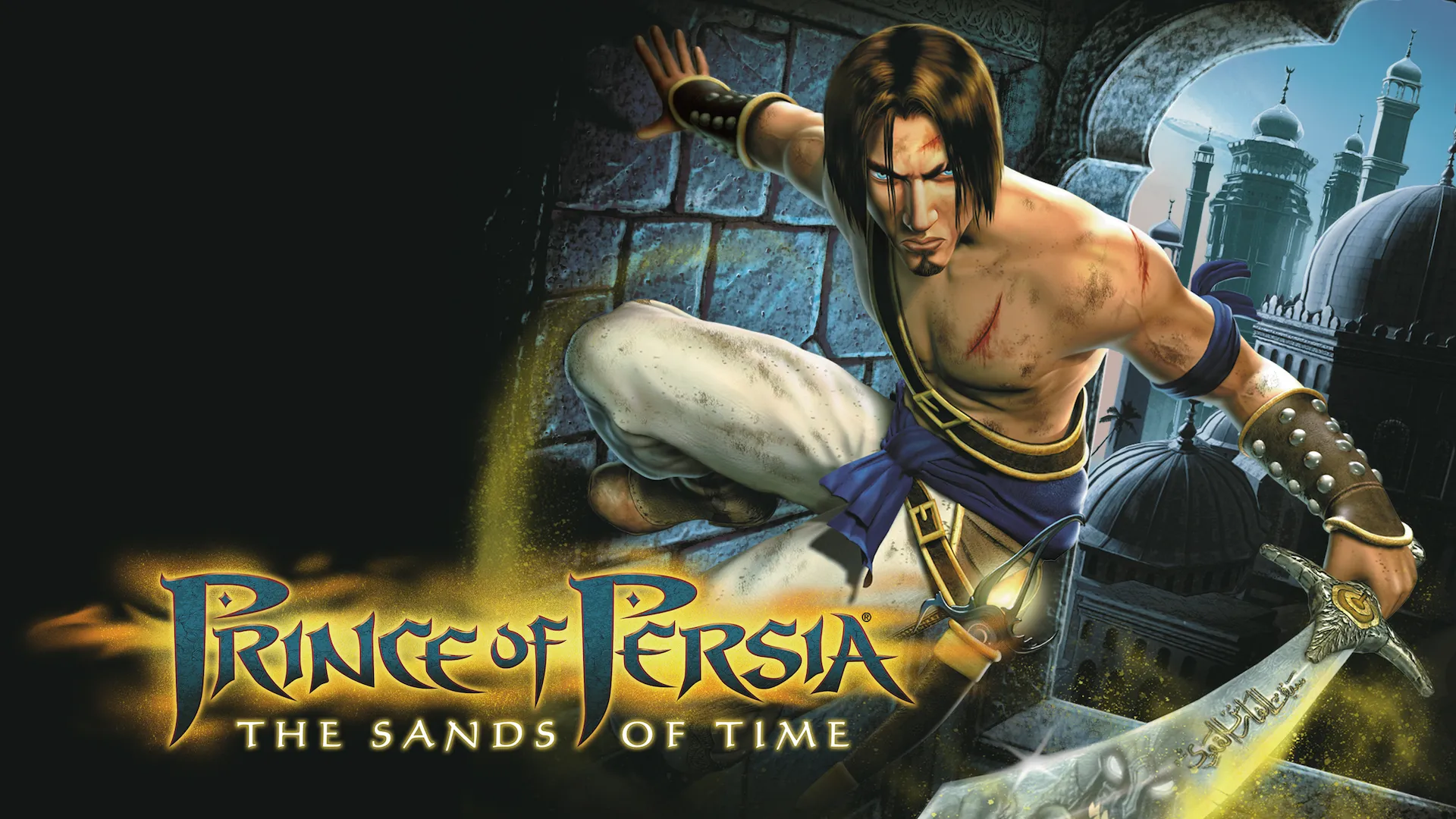
The Prologue: A Narrative Masterstroke in First-Person Hindsight
Most games begin with a tutorial; The Sands of Time begins with a confession. The Prince sits in the dark, speaking to an invisible listener (who we later discover is Farah), framing the entire game as a story he is telling. This isn’t just a framing device—it’s a gameplay mechanic.
When the player fails, the narration cuts in: “Wait, wait… that isn’t how it happened.” This creates a seamless loop between player error and character history. In terms of UX Design, this is the ultimate “Soft Fail.” Instead of a jarring “Game Over” screen that breaks immersion, the game treats your death as a lapse in the storyteller’s memory. This keeps the player’s heart rate up without the frustration of reloading a save file.
- Narrative Immersion: You aren’t “playing a game”; you are “correcting a story.”
- Performance: Yuri Lowenthal’s voice acting captures a Prince who is physically exhausted by his own tale.
- Pacing: Story beats happen during gameplay, not just in static cutscenes.
“Most people think time is like a river that flows swift and sure in one direction. But I have seen the face of time, and I can tell you: they are wrong.” — The Prince
2. The Mechanics of the Dagger: Weaponized Regret
The Dagger of Time is the most iconic “Utility Weapon” in gaming history. It isn’t just for stabbing; it is the player’s remote control for reality. In 2003, the ability to “Rewind” was a technical miracle. It required the engine to constantly cache the last 10 seconds of every object’s position in the game world.
| Ability Name | Controller Input | Sand Cost | Tactical Use-Case |
|---|---|---|---|
| Recall (Rewind) | L1 / LB (Hold) | 1 Sand Tank | Correcting a platforming miss or a fatal sword strike. |
| Eye of the Storm | L1 / LB (Tap) | 1 Sand Tank | Slowing down traps like rotating blades or spiked logs. |
| Power of Haste | R1 + L1 | All Tanks | A “Berserk” mode that freezes time while the Prince moves at 2x speed. |
| Mega Freeze | Guard + L1 | 1 Power Tank | Freezes every enemy in a 360-degree radius for a tactical reset. |
3. Architecture as a Puzzle: Navigating the Palace of Azad
In modern games, we have “detective vision” or “mini-maps” that tell us where to go. In The Sands of Time, the architecture is the map. The level designers used visual breadcrumbs—a flickering torch, a slightly discolored brick, or a hanging tapestry—to guide the player’s eye toward the next ledge.
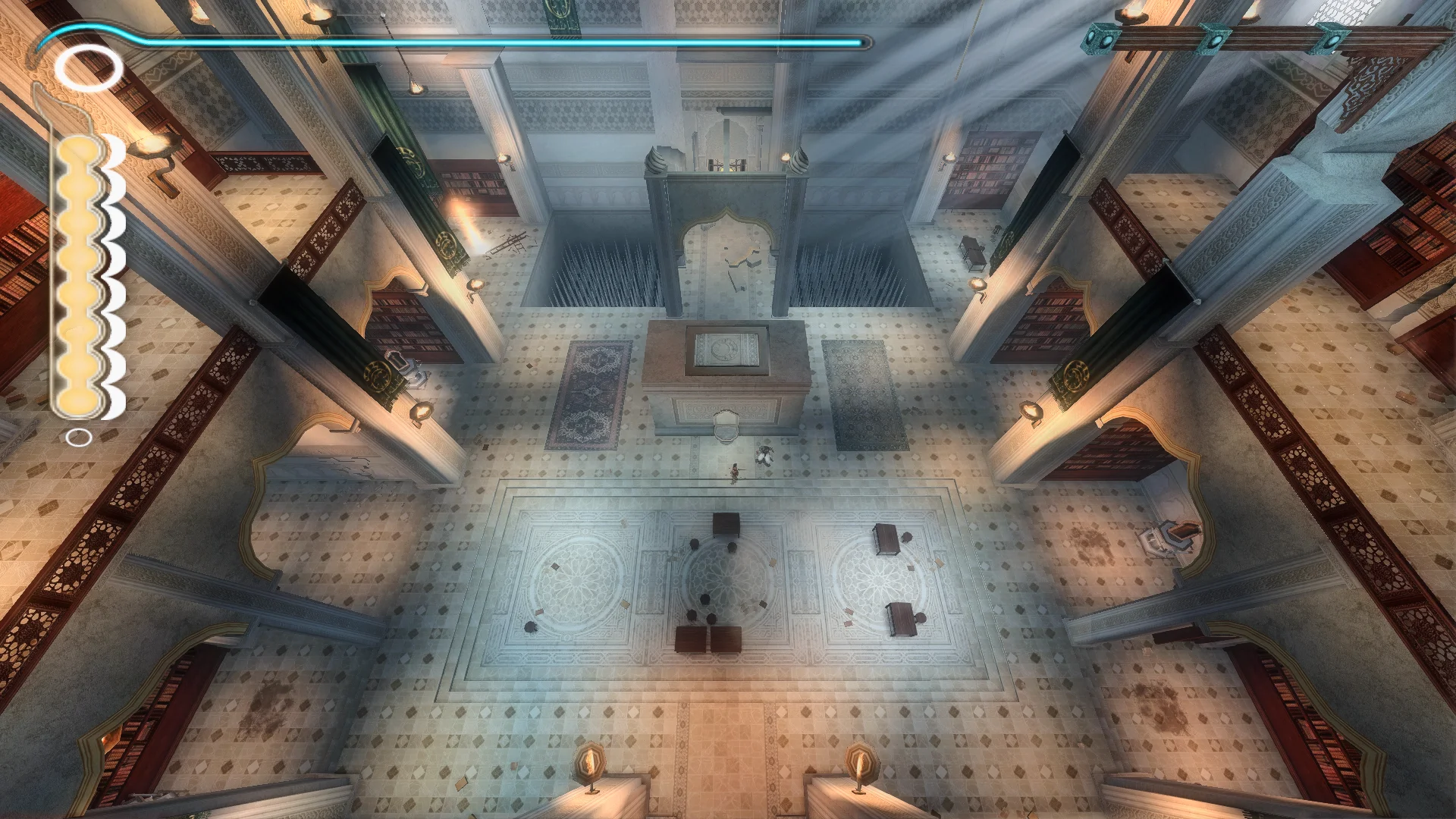
The Zoo serves as the first major “Open” area. Here, the player must learn to manage camera angles while wall-running across curved surfaces—a major technical hurdle for 2003 cameras.
This section introduces water mechanics. Water is the only thing that heals the Prince, making every fountain a “Safe Zone” and a strategic landmark in a hostile environment.
4. Technical Deep Dive: The JADE Engine’s Legacy
javascript

// A conceptual look at the 'Sand Tank' logic
function checkSandResource(action) {
  if (currentSandTanks > 0) {
    executeTimeManipulation(action);
    currentSandTanks--;
  } else {
    playAudio("No_Sand_Warning.wav");
    enablePermadeath(true);
  }
}
5. The Prince vs. The Wraith: Character Progression
The Prince (Left)
- Visual Evolution: As the game progresses, the Prince’s royal silks become tattered, his armor is discarded, and he becomes a raw, focused warrior.
- Combat Style: Fluid, acrobatic, and centered on using the environment (rebounding off walls).
The Sand Wraith (Right)
- Visual Evolution: A dark, ghostly reflection of the Prince, appearing in later sequels but hinted at here through the “Visions” at save points.
- Combat Style: Aggressive, unrelenting, and represents the “cost” of using the Sands of Time too often.
6. The Aesthetic: “Arabian Nights” Meets “Dream Logic”
Ubisoft used a heavy “Bloom” effect that made everything look soft, warm, and slightly unreal. This was a deliberate choice to make the game feel like a legend rather than a historical document.
- Color Palette: Use your Blocksy Global Colors here. The game relies on Burnt Oranges (Sunset), Deep Blues (The Midnight Climb), and Shimmering Golds (The Sand itself).
- Soundscape: A mix of traditional Persian lutes and early-2000s hard rock that kicks in during combat, creating a “Trance” state for the player.
7. Conclusion: The Remake and the Sands of Fate
As we look toward the future remake, the question remains: can modern fidelity capture the “soul” of the original? The magic wasn’t in the polygon count; it was in the flow.
Stuff and things